Topher’s Application to DMNS
for the role of Graphic Designer
Well, hello there! If you’re visiting this page, you’ve probably clicked on the hyperlink on my cover letter or my resume. Thank you for your consideration!
This is a brief run-down of some of the methods I’ve been using to create an efficient graphics pipeline for myself without relying on third-party algorithmically generated content. I’ll be focusing on the work that I’ve been doing at RMCAD, but I tend to approach each new project in a similar way, whether it’s a video project, a graphics project or an interactive project.
RMCAD has 14 main departments, and I’ve been putting together a system of colors and assets and graphics that allow us to make each department feel unique in their own way, while also feeling at home in a cohesive overall environment.
For example, here’s a little of some of what I’ve done for the photography department.
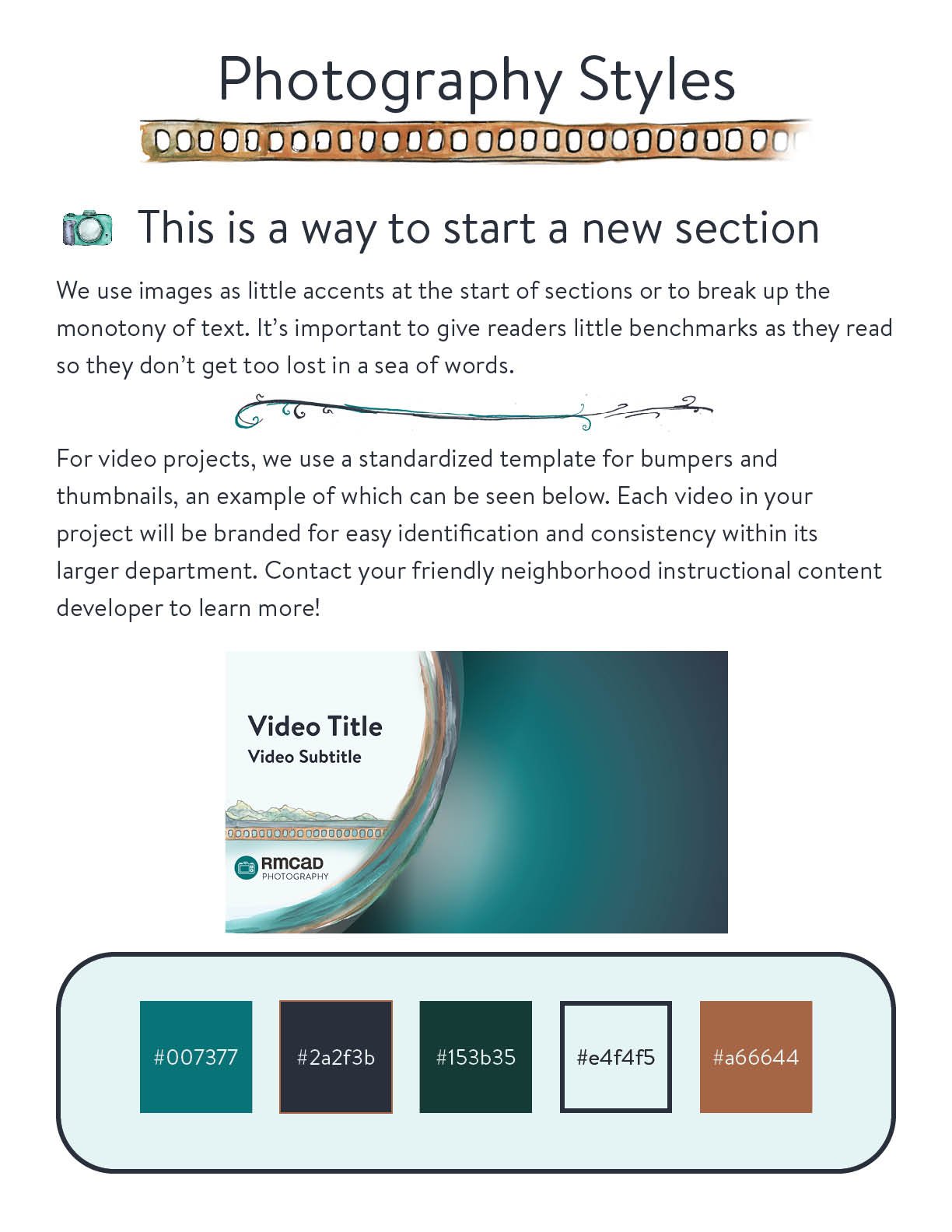
Apologies for the text-heavy jpeg; Squarespace doesn’t have an inline PDF block. Click on the image to view the PDF in a new tab.
It’s a pretty simple one-page block, but what makes this cool is the way that each bit of content has been incorporated into a larger ecosystem so that it can be used in different context.
All of these assets start off as scans, which are eventually converted to Photoshop files.
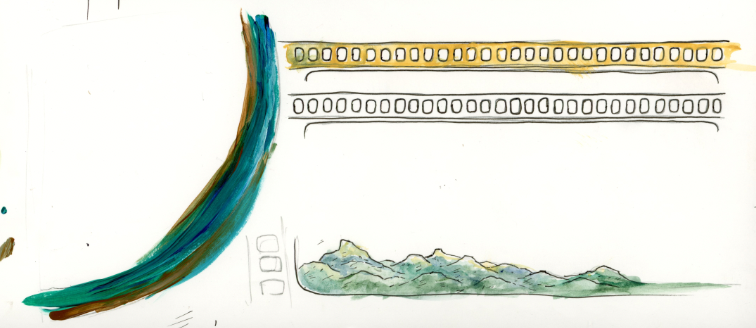
Original watercolor scan

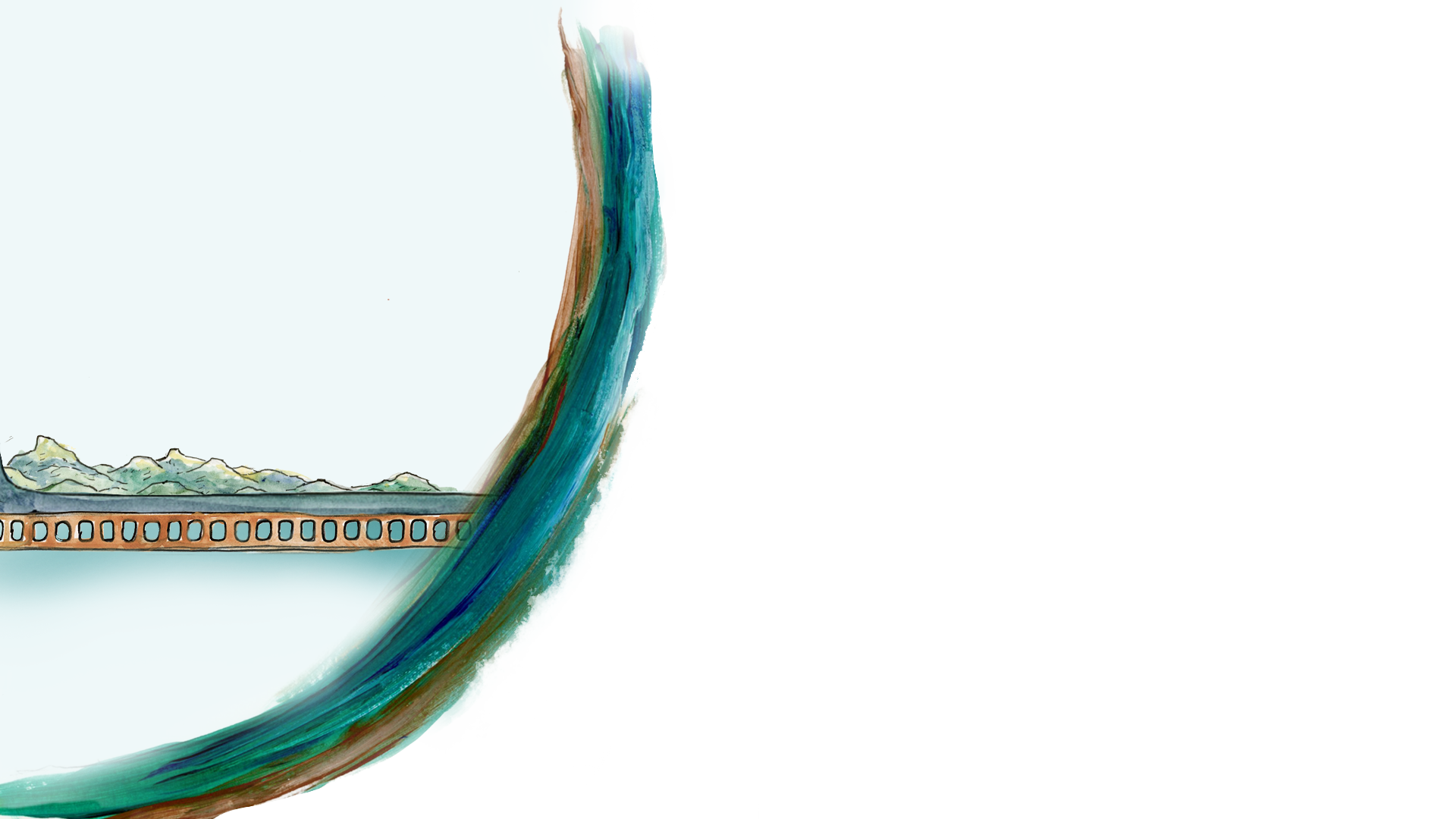
Photoshopped versions of the original files
From there, each Photoshopped asset is used in a variety of different ways. I use Illustrator as a way to manage the size and resolution of image and to convert them into a format that’s more friendly for the web. Those web-friendly PNG files are then uploaded to our server and referenced through code to incorporate them into our learning management system for our final deliverable to the students.
I also use those Photoshop files in After Effects to make motion graphics templates for our video intro bumpers. Whenever I or anyone on the online learning team start on a new video project, they start with a template folder pre-loaded with 14 different versions of our intro bumper.
And whenever one of us starts on an interactive graphics project, we start with a file loaded up with basic colors and styles.
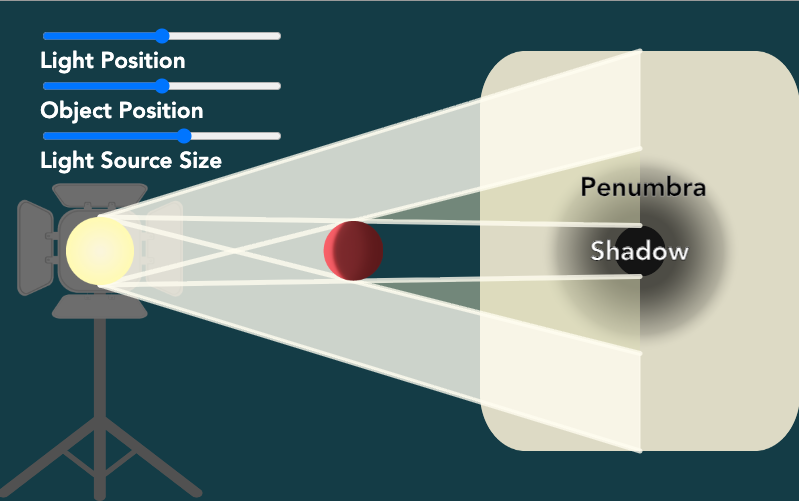
Little interactive graphic I madeusing HTML and p5.js to help demonstrate how the size of a light affects its shadow. Click the image above to play around with it.
And, importantly, all of this content is based around those original basic colors and Photoshop files. If I realize that I need to update an image, it’s pretty simple to update my file in Photoshop and have those changes be reflected in all of my graphics templates going forward.
The result is a system of graphics that is efficient, easy to use and easy to update without sacrificing quality. I’ve created basic templates that can be shared with colleagues, instructors and contractors to make sure that we are all working towards the same goal with the same standards.
Video I filmed and edited for the Fine Arts department at RMCAD using a similar graphics template as the one I made for Photography. Thank you to the generous and talented Blake Ballard for giving consent to share it.
This is a pipeline that I’ve developed for RMCAD, but I try to approach every project in a similar way. I look at the entire scope of what needs to happen and I build out a skeleton for myself so that each smaller step in the process can be done quickly and purposefully.
As mentioned in the job description, this position requires someone who can think in terms of multiple modes of delivery, and who can think both in terms of the large scale scope of a project and is able to coordinate with other designers and vendors. I feel that my work at RMCAD demonstrates that I’m the kind of designer you’re looking for at the Denver Museum of Nature and Science. Thank you again for your consideration, and thank you for reading through this little supplement to my application. Hope to talk with you soon!
-Topher